Grilled Octopus with Lemon and Oregano
Take your time. Don't rush.
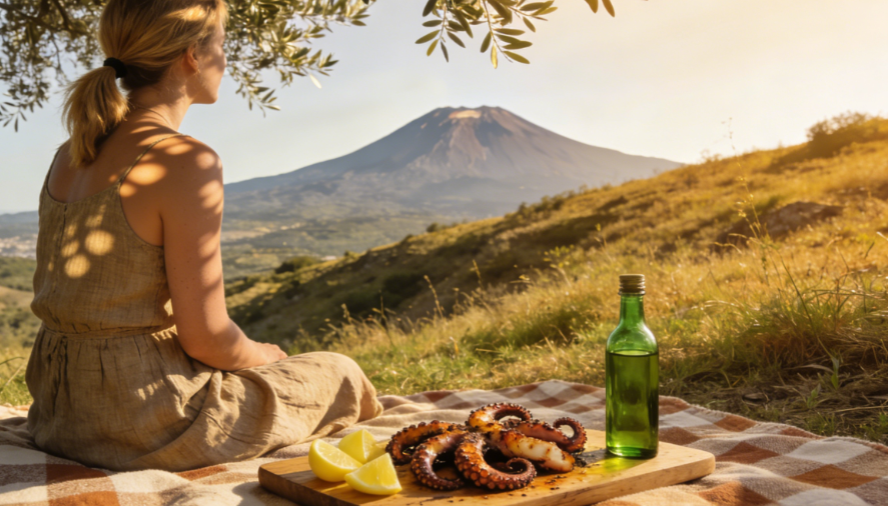
The wind is playing with the corner of my picnic blanket again. I press it down with a smooth stone from the riverbed. Here, on the slope of Etna, the air smells of wild thyme and dry earth. In the distance, the volcano sleeps, a gray silhouette against the blue. It reminds me of that afternoon in Greece. A small village by the sea. I ate grilled octopus there. Not just food. A memory. The lemon was bright, the oregano wild, the olive oil deep and green. It stayed with me. So I decided to bring that flavor back to my olive grove. To recreate it here, under my own sun.
Many people try to make this dish. They focus only on tenderness. "Is it soft?" they ask. But they miss the soul. They drown the seafood in acid. The lemon screams so loud you can't hear the ocean anymore. Or they dump handfuls of oregano until it tastes like a medicine cabinet. And the oil? Often, it's just fat. Thin. Bland. It doesn't hold the story together. You get something soft, yes. But no fragrance. No depth. Just "tender." Empty.
Wait. A bee. It landed on the lemon slice I cut earlier. Let it drink. It needs the sugar too. I'll wait.
So then... how do we fix this? How do we build the layers?
It starts with the octopus itself. You cannot rush the texture. If you boil it too long, it turns to rubber. Too short, it's chewy in a bad way. I learned this the hard way. My first attempt back in Sicily was a disaster. The lemon was too aggressive. The oil felt watery. I couldn't find that balance. The flavors fought each other instead of dancing.
Then I remembered the old fisherman in Greece. He didn't use a timer. He used his hands. He told me about the freeze. Yes. Freeze first. Then boil. Then grill. Three steps. Like breathing. In, hold, out.
When you freeze the octopus, the ice crystals break down the tough fibers gently. Nature does the work. Then, a slow simmer. Not a boil. A whisper of heat. Until the tentacles curl. Like fists opening up. Finally, the fire. High heat. Just enough to char the skin. To give it that snap.
Look at the difference. It changes everything.
| Method | Texture Result | Flavor Absorption | Overall Feel |
|---|---|---|---|
| Boiled Only | Often rubbery or mushy | Low, stays on surface | One-dimensional, wet |
| Grilled Raw | Very tough, chewy | None, burns outside | Harsh, difficult to eat |
| Freeze-Boil-Grill | Tender inside, crisp outside | High, absorbs oil and herbs | Complex, balanced, alive |
See? It's not magic. It's patience.
Now, the oil. This is my world. The oliva. Here in Sicily, we know that oil is not just a ingredient. It is the bridge. It connects the land to the sea. For this dish, you need an extra virgin oil with a bit of pepper at the back of the throat. That sting? That's life. That's the polyphenols. If your oil is bland, the dish falls flat. It has no spine.
Here is what to look for when you choose your oil:
- Color should be vibrant green, not yellow or clear. Green means fresh grass and artichoke notes.
- Smell it. It should remind you of cut grass, tomatoes, or almonds. Never smell like crayons or old nuts.
- Taste a drop alone. It should tickle your throat slightly. That bite is the flavor carrier.
And the lemon and oregano. The golden ratio. It's not about measuring cups. Never measuring cups. Cooking is a feeling. But if you need a guide to start, listen to this:
- Lemon: Use mostly the zest. The yellow skin. Rub it between your palms. The oils wake up. Add only a few drops of juice at the very end. Just a whisper of acid.
- Oregano: Dried is better here than fresh. But it must be rubbed. Crush it between your fingers until it becomes dust. This releases the hidden scent. Fresh oregano can be too sharp, too "herby." Dried oregano sings with the char.
Good food doesn't need a story, but every story needs good food, and the start of good flavor is always excellent olive oil.
I pour the oil over the hot octopus. Listen. A faint sizzle. The heat wakes up the oil. The aroma rises. It's not just smell. It's a presence. The peppery kick of the oil meets the smoky char of the tentacle. Then, the lemon zest hits. Bright. Sunny. It cuts through the richness but doesn't dominate. Finally, the oregano. Earthy. Wild. It grounds everything.
Wait. The dog from the farm down the road is barking again. Short, sharp barks. Chasing a lizard probably. Let him run.
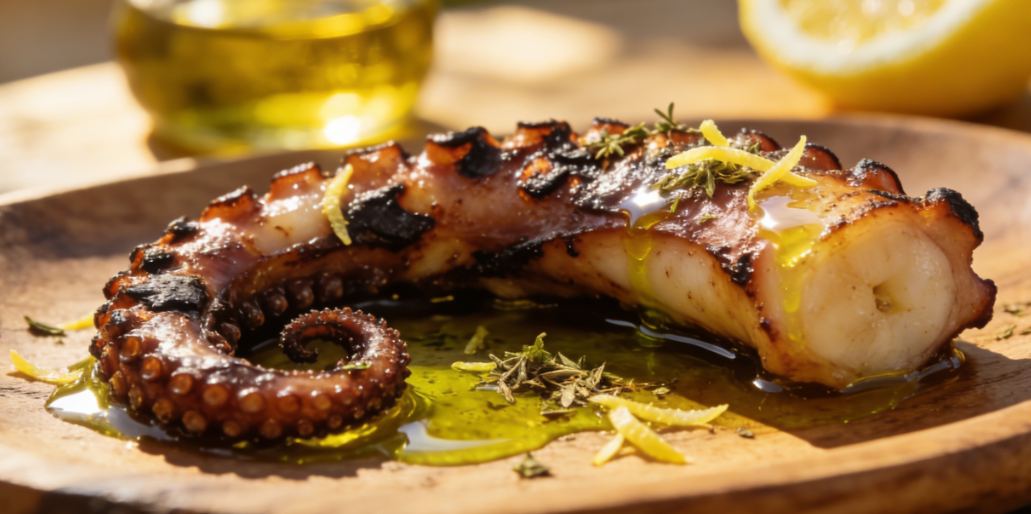
I take a piece. The tentacle. It's curled perfectly. The skin is blistered, dark purple and black. I bite.
Snap.
The outside gives a little resistance. Crunchy. Then, the inside. Soft. Gelatinous but firm. It yields. The flavor hits in waves. First, the smoke. Then, the salt of the sea. Then, the lemon dances on the tip of the tongue. A quick spark. Before it fades, the oregano wraps around it. And underneath it all, the oil. Coating. Rich. Fruity. It lingers. It makes you want to close your eyes.
The lemon juice splashed on my finger earlier. The sun warmed it. A tiny sting. But fresh. Clean. That's the feeling of this dish. Alive.
It's not about piling ingredients on top of each other. It's about space. Giving each element room to breathe. The octopus needs the fire. The lemon needs the restraint. The oregano needs the heat to wake up. And the oil? The oil needs to be the canvas.
To be fair, I almost ruined it the second time too. I added the lemon juice while it was still on the fire. Mistake. The acid cooked too fast. Became bitter. I had to start over. Slow down. Omar, breathe. Piano, piano.
That's the secret. Not the recipe. The pace.
In Greece, the fisherman watched the sea while he cooked. He wasn't looking at the clock. He was watching the smoke. Listening to the wind. Here, I watch the olive trees sway. The shadows grow longer. The light turns from gold to amber.
The flavors merge. They become one. You can't separate the lemon from the oil anymore. They are married. The sea and the land. Talking to each other.
I pick up another piece. The texture is addictive. That contrast between the crisp skin and the tender meat. It makes your jaw work a little. You have to pay attention to eat it. You can't shovel it in. You have to chew. To taste.
A fly buzzes near the oregano jar. I wave it away gently. No killing. Not today. Everything is peaceful.
The sun is moving west. Touching the top of the volcano. The air is cooling. The oil in the bottle is settling. You can see the sediment at the bottom. Cloudy. Real.
I fork the last piece of octopus. Some oregano crumbs fall onto the checkered cloth. Dark specks on red and white. The light is fading now. The flavors are still on my tongue. Lingering. Peppery. Bright.
Time to go back. The new press needs checking. The oil is settling in the tanks. I wonder if it has that same green fire today.