
Greek Salad
Take your time, don't worry.
The wind blows down from the slopes of Mount Etna, with a hint of sulfur and the aroma of hay. The picnic mat was spread on the edge of the olive grove, the sun was a little harsh, and I squinted and pulled the corner of my skirt to the side to avoid a group of marching ants. The cup of cold-brewed mint tea in my hand, half of the ice melted, take a sip, the coolness slides down my throat, and the whole person is lazy.
Don't do complications today. Just want to talk about Greek salad. Horiatiki。
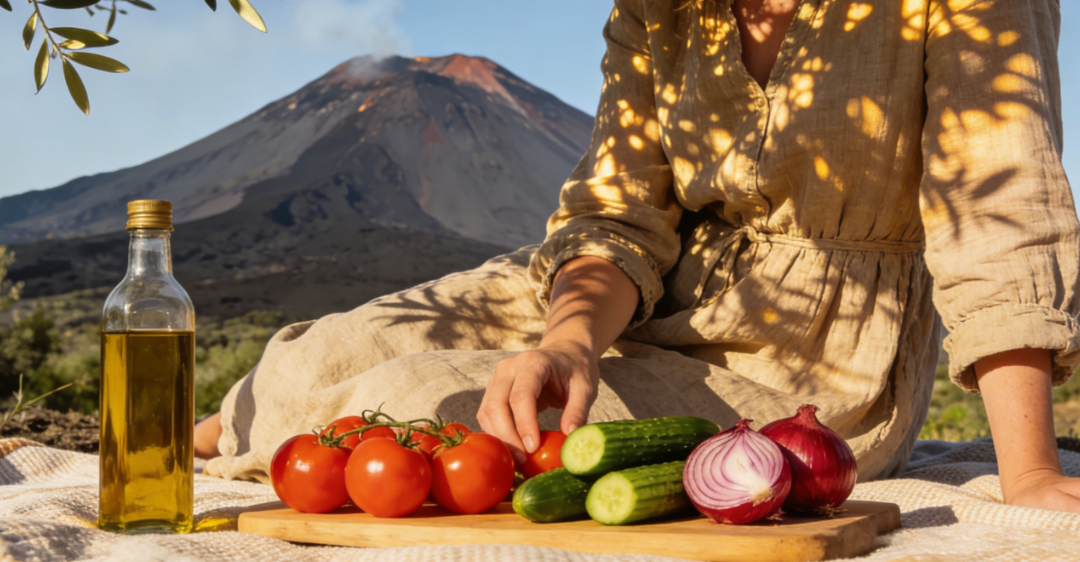
The reason is simple. I received a box of Kalamata olives from a Greek friend the other day. Dark purple, wrinkled, very much like our old oliva in Sicily. The moment you open the box, the salty and fresh sea flavor hits your face. I think I have to use it to make the most authentic Greek salad. But the scene I had seen in the Milan supermarket suddenly flashed in my mind - those so-called "Greek salads".
Really, it's a little sad.
Many people make this dish, it's too casual. Grab the lettuce leaves and stuff them in, obviously the authentic ones never use lettuce; pour some black balsamic vinegar, thinking that it is more advanced, but in fact, red wine vinegar is the soul; The most outrageous thing is the olives, which are randomly grabbed and counted by ordinary black olives, and some are even dyed. The last thing made is not the same. Watery and tasteless. People mistakenly think that this Mediterranean classic is just like that, unremarkable.
In fact, it is not a problem with the food, but with impatience.
Wait, this color is wrong.
Just now, when I was checking the olives sent by a friend, I suddenly remembered a batch of "Kalamata" that I had seen at a certain market before. The color is dark and shiny, and the uniformity is terrifying. When I picked it up and smelled it, there was no natural fruity aroma, only a strange sour smell. Not true. It must have been soaked in dye. The true Kalamata has a pleated skin and a dark purple-reddish color, like a ripe plum, rather than dead black.
For this salad, I had a lot of trouble looking for Feta cheese a while ago. The challenge is here. The shelves are full of white blocks with "Feta" written on them, but when you look at the ingredient list, it's all milk, no goat's milk. Or the process is completely wrong, it is a block of ordinary white cheese pressed. The real Feda must be PDO certified, from a specific production area in Greece, at least 70% of the sheep's milk, and the rest is goat's milk.
It was a bit irritable at that time. Why is it so difficult to distinguish between real and fake even a piece of cheese?
Later, I contacted the Greek olive farmer friend. He smiled and told me on the other end of the phone, "Omar, take your time." Good food doesn't need a story, but every story needs good food, and the story of a Greek salad starts with an olive. "He taught me how to read the PDO logo and how to smell that unique herbal fragrance. He said that the origin and tradition of ingredients cannot be replaced. Just like our olive oil, if you change the volcanic ash soil, the taste will be wrong.
At that moment, my heart suddenly calmed down.
So there is this table. I casually drew it on a napkin, you can take a look.
| Ingredients | Authentic Greek Salad (Horiatiki) | Improvements for common bugs |
|---|---|---|
| Green leafy vegetables | None (absolutely without lettuce) | Lots of lettuce leaves, arugula |
| Vinegar | Red Wine Vinegar | Black vinegar (Balsamic), lemon juice |
| Olive | Kalamata olives (with pits) | Common black olives, pitted olives, dyed olives |
| cheese | Lumpy Feta, sprinkled on top | Shredded cheese, mozzarella, plain white cheese |
| Seasoning | Only olive oil, oregano leaves, salt | Black pepper, garlic sauce, complex salad dressing |
See? Simple, but exquisite.
When it comes to picking Kalamata olives, just keep these points in mind:
- Look at the color: it must be dark purple-red, with a natural luster, not dead black.
- Feel: The skin should have natural wrinkles, and the flesh should be full and elastic, and not soft.
- Smell: It should have a strong fruity aroma and a faint wine aroma, and should not have a pungent sour or chemical smell.
And feta cheese, don't be sloppy:
- Check certification: The packaging must have the EU PDO mark to ensure that it is produced in Greece.
- Look at the ingredients: the first place in the ingredient list must be sheep milk, or sheep milk mixed with goat milk, not all milk.
- Taste the taste: The texture should be slightly grainy, crumbly but not scattered, salty and fresh in the mouth, and then have a milky aroma and sweetness.
I was cutting the tomatoes when suddenly – wait, the bees stopped on the picnic mat. Don't move, let it fly away on its own. It probably smells the sweetness of tomatoes. Okay, it's gone. We continue.
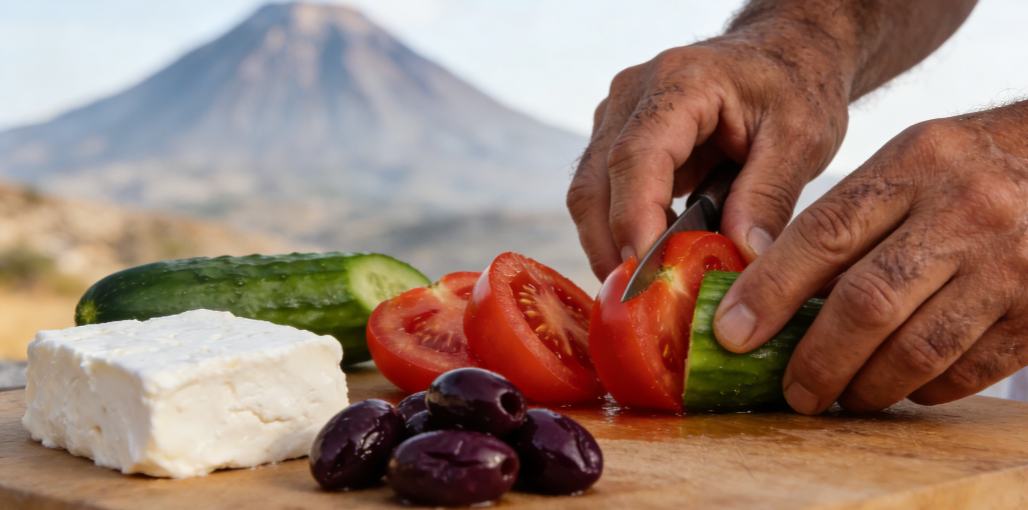
The blade slashed through the tomato, and the juice splashed out, a little warm. Cucumbers are cut into thick pieces, without peeling, the skin is crispy and has a field atmosphere. The red onion is shredded, and my eyes are a little stinging, but looking at the transparent purple layer, I feel comfortable again. Stack these in a large dish without mixing. Cover the whole feta cheese directly on top and sprinkle with a pinch of dried oregano leaves.
At this time, take out our protagonist. Olive oil.
I pulled the self-squeezed bottle of Extra Virgin out of my bag. The golden liquid flows out slowly, covering the cheese and vegetables. At that moment, the taste coincides with the Mediterranean sun. There are no complex sauces, just oil, vinegar, salt, oregano. Every ingredient speaks. The sourness of tomatoes, the crispness of cucumbers, the spiciness of onions, the saltiness of olives, and the creaminess of cheese.
Good food doesn't need a story, but every story needs good food, and the story of a Greek salad starts with an olive.
I remember when I was in Milan, I was in a hurry at noon, bought a boxed salad, stood in the subway station and swallowed it in a few bites. At that time, I felt that eating was just to live. Now sit here, watch a wisp of smoke drift out of the crater in the distance, and listen to the jingle of sheep bells in the distance. The wind blew the picnic mat up and fell again.
The cold brew tea was accidentally spilled on the skirt just now, leaving a small dark mark. It doesn't matter.
The combination of ingredients is so wonderful. It seems casual, but it is actually rigorous. Lettuce is not used because lettuce is too watery, which will dilute the richness of olive oil and cheese; Don't use black vinegar because its sweetness will overshadow the freshness of the tomato; Kalamata with a pit must be used because the process of gnawing on olive pits, in itself, is a slowing down ritual.
This is the value of ingredients. They don't require you to tell a story on purpose, and they are powerful in their own right. As long as you respect their origin and their traditions, they will reward you with the purest taste.
I took a fork, forked a piece of feta cheese covered in olive oil and put it in my mouth. The salty umami explodes on the tip of the tongue, followed by the aroma of oregano.
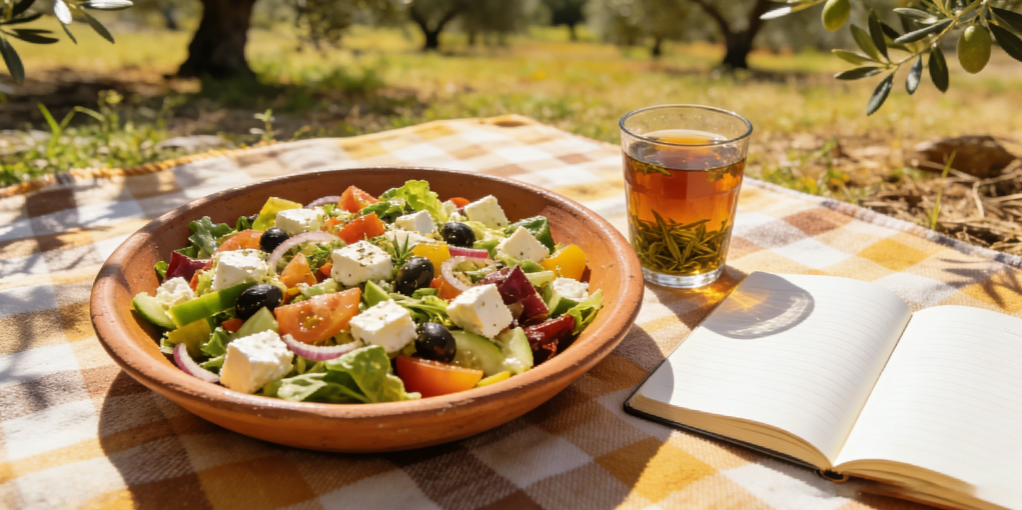
Follow your own feelings and taste the best.
I finished mixing the last salad, and the olive oil bottle was still open, with a drop of oil hanging from the mouth of the bottle. The smoke from the crater in the distance seemed to have become thicker, and the sky was slowly darkening. I have to go see if it's time to harvest olives, the wind over there seems to have changed direction......