
Lamb Kleftiko (Lean Cut, No Potatoes)
Bandit meat in a slow fire: When Memphis smoke meets Greek tinfoil packs
Child, you know, the smell in this kitchen is not right. Not the familiar smoky flavor with the sweet aroma of hickory, but a cleaner, more humid scent of lemongrass and oregano leaves. I stood in front of this old-fashioned gas stove, holding a roll of thick hemp rope left by my grandfather, and looked at the piece of lean lamb from Greece on the chopping board. Many people make this Kleftiko, which is what we call "robber barbecue", and always mess up. Either the meat is too dry, dry like a piece of wood, and you can't bite it; Once the potatoes are removed, the juice cannot be retained, and the final result is not "kiln roasting" at all, but like throwing meat into water to cook a pot of soup. If the tin foil is not wrapped tightly, the aroma will run away, and the soul will be gone.
I remember the other day at a small Greek restaurant and tasted a bite of lean cut Kleftiko without potatoes. The meat was incredibly tender, but the juice burst in the mouth. At that moment, I seemed to see what my grandfather looked like in his backyard in Memphis. He was the same, wrapping the brisket tightly in thick tin foil, as if he was packing luggage for a child who was traveling far away. I want to combine these two ancient crafts.
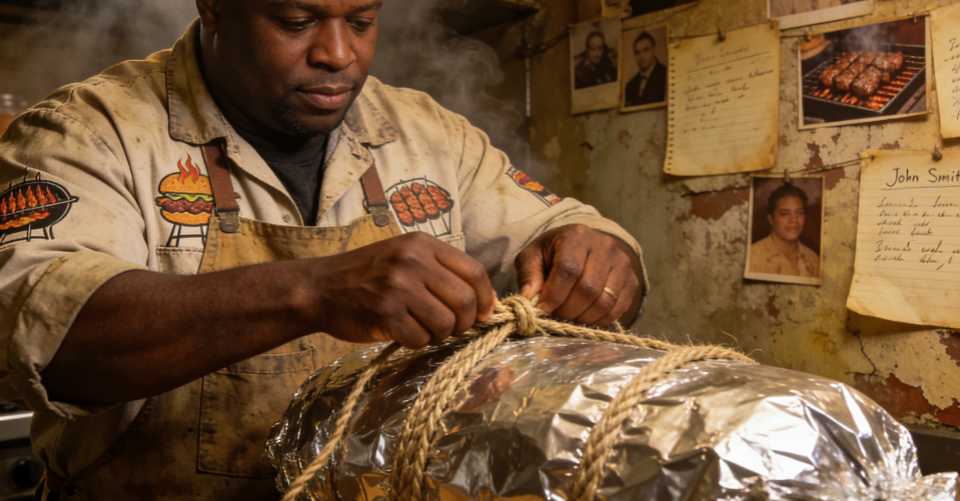
But this first time I tried it, it really made my old face go somewhere. The tinfoil leaked. In that instant, I heard a "zila" sound, and my heart chuckled. The gravy dried up, and the lean mutton that should have been plump became dry and dry. Ugh, grandfather would never make such a mistake. I looked at the failed piece of meat and panicked. Why? Which step is wrong? I didn't think about those complex chemical principles, I just felt that my fingers were painful from the rough hemp rope, and the pads of my fingers were hot. It really hurts, like a reminder to me: don't be in a hurry, child, don't be in a hurry.
I have to slow down. I dug out my grandfather's tin toolbox, which was full of old objects. I found the roll of cotton thread, the kind my grandfather used to tie barbecue. Suddenly, I caught a glimpse of an old photo on the wall crooked, which was the way my grandfather was smiling honestly with an old-fashioned grill. I stopped what I was doing, walked over, stood on tiptoe, and straightened the frame. When my fingertips touched the dust on the edge of the photo frame, the restlessness in my heart slowly calmed down. Don't worry, the heat hasn't arrived yet.
After studying it all day, I pondered the taste. The secret of the grandfather, plus the wisdom of the Greeks, is all in this word "wrap".
You see, the traditional Kleftiko is actually different from this skinny cut potato-free version I'm going to make:
| Comparison item | Traditional Greek Kleftiko (with potatoes) | Lean-cut without potatoes (John's Fusion) |
|---|---|---|
| Lock the juice core | Rely on potatoes to absorb excess oil and water | Physically locks the steam with double-layer tin foil + cotton thread |
| Wrapping method | Single layer of tin foil, sometimes sealed with dough | Double-layer staggered tin foil with cotton thread cross-binding |
| Heat logic | Medium to high temperature, using vegetable water | When the extremely low temperature is long, the underground kiln is simulated |
| Source of flavor | The gravy soaks the potatoes | The gravy circulates itself and the vanilla steam fumigates |
You have to know that this thin cut meat, without the protection of fat and the help of potatoes, you have to be gentler with it. Time, longer.
My grandfather said that wrapping meat should be like wrapping a gift, strict but hold your breath, and let the steam find its own way out.
This sounds mysterious, but in fact, he has an accurate head in his hand. I wrap it like this, you remember:
- Spread a large layer of tin foil, sprinkle with lemon slices, garlic cloves and a large amount of dried oregano leaves, put the lamb on top and cover with a layer of herbs.
- The second layer of tin foil should be covered at a staggered angle, and the edges should not be folded, but should be rolled in layer by layer like a folded envelope, and rolled tightly until a sealed cabin is formed.
- Finally, use the coarse cotton thread to tightly strangle the tin foil bag crosswise and tie a knot. When strangling, it is okay even if the rope is strangled into the flesh, just to have that feeling of tightness.
And this trick to lock the juice, don't think it's some high-tech, it's all stupid kung fu:
- Massage the lamb with salt and olive oil in advance, don't add water, the water will dilute the meat flavor, and the oil is the key to locking in moisture.
- The oven temperature should be adjusted 20 degrees lower than the instructions, my old oven temperature is not accurate, I have to rely on the feel, about 120 degrees, and bake it for six or seven hours.
- Don't be curious to open it halfway through, don't look at it at all. As soon as you open it, the anger runs away, and the meat is old.
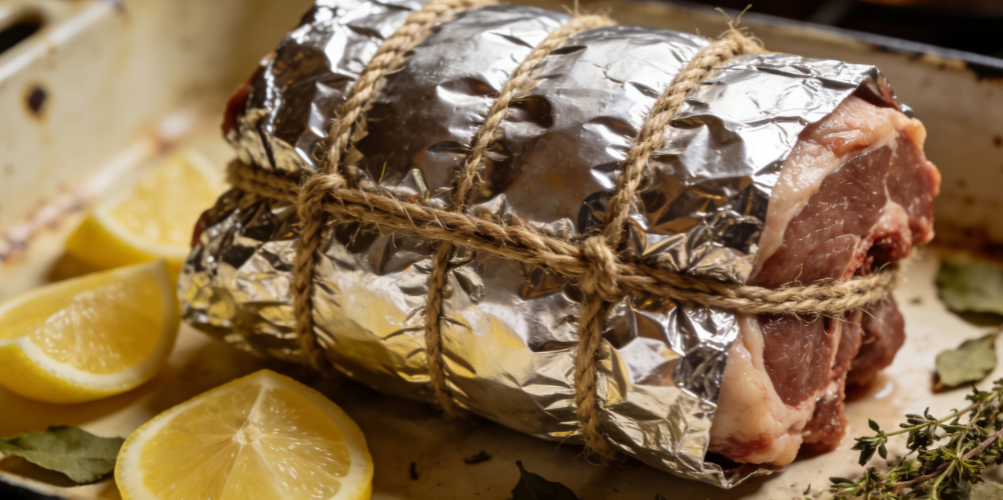
I just kept it. The kitchen was quiet, with only the ticking of old-fashioned wall clocks. I rubbed my forehead with the back of my hand, all sweaty. At this time, the fragrance began to drill out. It's not the kind of incense that goes straight to the head, it's slow and wispy, as if it seeps out from the ground.
I measure it by "I'll know when the time comes." It's not about looking at the clock, it's about smelling, it's about listening to sounds. When the slight "gurgling" sound came from the tin foil bag, when the sour aroma of lemon and the mellow smell of mutton filled the entire vintage kitchen, and even got into the fibers of my workwear, it was time.
The moment I opened it, the steam rushed out with a "pop", which made the back of my hand instantly turn red. Hiss—it hurts. But I didn't care about rubbing, my eyes stared straight at the tin foil bag. Cut the cotton thread, and the rough fibers rub through the fingertips, a little prickly. Uncovering the tin foil, I saw it at that moment. The gravy, full of gravy, flows quietly in the package without potatoes, and the mutton trembles and is so tender that it seems to melt when touched.
It worked. Child, you see, the old guys in different places have the same wisdom. Whether it is Memphis smoke or Greek kiln roasting, the core is one word: respect. Respect the piece of meat, give it enough time and it will reward you with the most beautiful taste.
My grandfather often said: "The fire must be steady, the smoke must be slow, the meat must wait, and there is no urgency." "I didn't understand before, and I always felt that I could sell a few more copies if I came out quickly. Now I understand that this waiting process is the soul of barbecue. This taste is the taste of my grandfather, and it is also the taste of inheritance.
I cut the tin foil bag, the steam was still rising, the aroma was right, but there was still a piece of cotton thread left uncut, I had to find scissors, and the oven was still hot.