墨西哥塔可
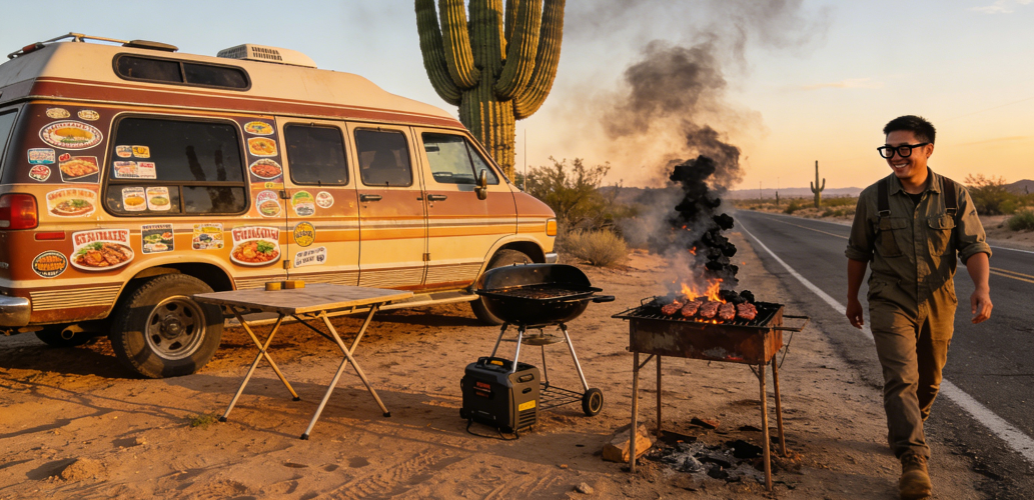
Baja California's Highway Log: At three o'clock in the afternoon, the camper van "old guy" climbed north along the shoreline with a bit of wind and crackling sand and gravel on the windows. The navigation showed no gas stations for thirty miles ahead, only a few scattered settlements. As soon as the fuel tank light came on, I smelled the smell - not the smell of gasoline, but the charred sweet aroma of charcoal-grilled pork mixed with roasted pineapple. Next to the deserted desert road, a cloud of gray-white smoke dragged me out of the air-conditioned room like some kind of signal.
You know what, many people — including me before — thought tacos were those hard, U-shaped nachos stuffed with seasoned ground beef and shredded lettuce. That's the American fast food restaurant version, really. That misunderstanding is so deep that people who really want to touch the soul of Mexican food can't find an entrance. Being misled by the wrong version is like finding treasure with a fake map, and you can only go around in the tourist area forever.
I parked my car on the side of the road and my wheels sank into a little soft sand. I didn't care so much, jumped out of the car, the wind was strong, and I almost blew over the portable grill on the folding table. In the distance, several huge cacti resemble silent guards, and a hummingbird hovers in mid-air, its wings so fast that it cannot be seen clearly. It's that booth. There is no sign, only a tarp propped up by a few wooden sticks, and below is a huge iron plate (comal), grease sizzling on it, and white smoke rising.
I found the problem when I got closer. The owner is an old gentleman with a wrinkled face and bright eyes, but he only speaks Spanish. He spoke quickly, with an Oaxaca accent. I was stunned, hmm...... My Spanish is only enough for beer. "Hola, uh, tacos?" I gestured, a little embarrassed. He nodded and pointed to the mountains of meat on the iron plate. Here comes the challenge. There were seven or eight bowls on the table, red sauce, green sauce, chopped onions, coriander, and diced pineapple. Dazzled. The first time I faced this kind of battle, I didn't know how to assemble it "correctly" at all. Which cake to take? Meat or sauce first? Red spicy or green spicy?
Wait, which salsa is not spicy? Red? It looks like fire. What about the green one? The boss was watching me, holding a clamp in his hand, waiting. I was a little panicked and my palms were sweaty. The wind suddenly picked up, and the tissues on the table were rolled up and flew all over the sky. "Ah! Lo siento!" I hurried after the flying napkin and almost hit the charcoal barrel next to it. Sorry, you continue.
The boss smiled, and the wrinkles in the corners of his eyes were crowded together. He saw that I was a stranger, a complete "gringo" (although he saw me as Asian, he was probably an outsider in his eyes). He didn't speak, just acted. He picked up a freshly pressed hot tortilla, soft and steaming. Then, use the tongs to pick up a piece of meat with charred edges – that's beef tongue, oh, beef tongue! - Place in the center of the cake. Next, sprinkle with a handful of onion and cilantro. The key came, he squeezed half of the lime juice and ended up scooping a mild-looking spoonful of green salsa. He handed me the wrapped taco and made a "eat it in one bite" gesture.
I remember eating Inihaw with my grandmother on the streets of Manila as a child, and I had a similar sense of ritual. The eagerness to directly touch the temperature of the food with your hands and then quickly send it into your mouth is connected. Food is the carrier of culture, and I believe it at this moment.
"What does this dish mean to you?" I couldn't help but ask in broken Spanish mixed with gestures. The boss stopped what he was doing, looked at the desert in the distance, and his eyes became very deep. He told me at a slow pace of speech, in conjunction with the movement of cutting meat. His family migrated here from Oaxaca in the south, and decades ago, there was nothing but this charcoal grilling technique. This small tortilla is not only meat, but also a migration road, a wisdom for survival, and a stubbornness to rebuild the taste of hometown in a foreign land. When he said this, his demeanor was very calm, as if he was saying that the weather was good today, but I was hit lightly somewhere in my heart.
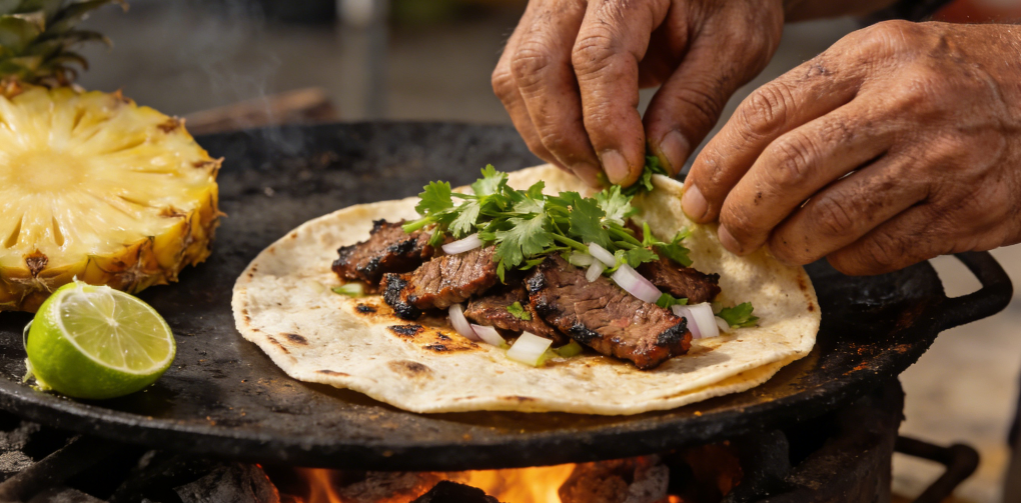
Finally, I took my first bite. Hmm...... How do you describe that feeling? The edges of the tortilla are a little rough, and the upper teeth tingle slightly when you bite into it, which is the texture of handmade stone-ground cornmeal, a real graininess. The beef tongue was stewed so badly that the fat melted in the mouth, with a smoky charcoal smell. The sourness of the lime juice instantly explodes, neutralizing the oiliness. Wait, that green salsa is actually spicy! The tip of my tongue suddenly hurt, as if I had been pricked by a needle, but then the sweetness of pineapple came up, gently enveloping the spiciness. Pain, then ultimate satisfaction.
This is not lunch, this is art. Mexicans have rolled hundreds of years of wandering and adaptation into this tortilla less than the size of a palm. There are no complicated plating, no exquisite tableware, only hands, cakes, meat, and fire.
I also tried to replicate it next to the camper. Grilled some pork belly on a portable grill and bought local tortillas. But I always feel that something is missing. Maybe the wind isn't strong enough? Or is the story in the boss's eyes missing? Either way, the process of trying it out is fun in itself. It doesn't matter if the tortilla is broken and the sauce drips on the cargo pants and can't be washed off.
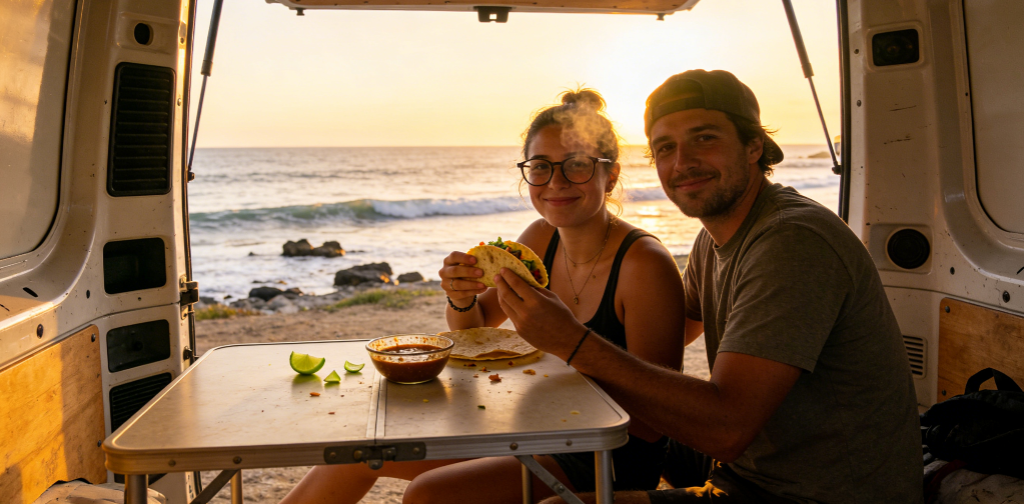
If you want to really get to know Taco, don't go to Cancun or Los Cabos' visitor sections. Really, drive inland or to those humble border cities. Find a shop with charcoal grills and tortillas pressed. See if the meat is sizzling on the iron plate and whether the ingredients are fresh and cut. Order a beef tongue or pork belly taco, squeeze a lime on top, and chat with the boss even if you don't understand the language. You will eat a taste that is more memorable than Michelin.
I chewed on the last bite of the taco, lime juice dripping down the pockets of my cargo pants, cool. The charcoal fire in the camp was still hot, and the wind blew the tarp loudly. I have to remove the lid, otherwise the sand will all go into the pot. Next stop, Oaxaca.
The best food doesn't have a Michelin star – it has a story. Next stop, go find the next food with a story.